Why the Shower Might Be Your Most Productive Engineering Environment

The Bug That Fixed Itself Overnight
Every developer has a version of this story. You've been staring at the same problem for three hours. You close the laptop, go make dinner, zone out in the shower — and somewhere between shampooing and rinsing, the answer just appears. You didn't think your way to it. It showed up uninvited.
That's not a coincidence. And it's not luck. It's your brain doing exactly what it's built to do when you stop forcing it.
The weird part? Most engineering teams are structured in a way that actively prevents this from happening.
What's Actually Going On in Your Brain
When you're deep in a coding session — eyes locked on the screen, headphones in, do-not-disturb on — your brain is running in what neuroscientists call the task-positive network. It's analytical, focused, sequential. Great for executing known solutions. Not great for finding ones you've never seen before.
When you step away — go for a walk around the block, drive to grab coffee, fold laundry — a different network kicks in: the default mode network (DMN). For a long time, researchers thought the DMN was basically idle brain chatter. Turns out, it's anything but. It's where your brain stitches together unrelated memories, draws unexpected connections, and surfaces solutions that your focused mind couldn't reach because it was too busy looking in one direction.
This is the neuroscience behind what researchers call incubation — the phase in problem-solving where you're not consciously working on something, but your brain absolutely is. Studies out of UC Santa Barbara and the University of Illinois have repeatedly shown that people who take breaks during creative problem-solving outperform those who grind straight through. Not by a little. Significantly.
For developers, this isn't abstract. This is the architecture of how breakthroughs actually happen.
The 'Deep Work' Trap
Here's where things get uncomfortable for a lot of engineering cultures.
The last decade of productivity discourse — especially in tech — has been dominated by the gospel of deep work. Minimize context-switching. Block your calendar. Protect your focus hours. And look, that framework has real value. Shallow interruptions are genuinely destructive. Slack pings every four minutes will absolutely tank your output.
But somewhere along the way, a lot of teams took "protect focus time" and turned it into "maximize time at keyboard." Utilization became the metric. Butts in seats — or at least, green Slack statuses — became the proxy for productivity.
That's a category error. And it's quietly killing creative problem-solving on engineering teams across the country.
When every hour needs to be justified with visible output, developers stop taking the walks. They power through lunch. They feel guilty stepping away from a hard problem because stepping away looks like giving up. The result is more hours logged and fewer actual breakthroughs.
The Gath3r Effect: What Happens When You Share the Struggle
There's a related dynamic worth naming here. One of the most reliable triggers for that "shower insight" isn't just rest — it's articulation. When you explain a problem out loud to someone else, you're forced to organize it differently than you do when it lives only in your head. That reorganization is often what unlocks it.
This is why rubber duck debugging works. It's why posting a question to a community forum — even before anyone answers — sometimes gives you the answer yourself. The act of gathering your thoughts to share them restructures the problem.
For developers who are part of active communities or teams where knowledge-sharing is normalized, this effect compounds. You're not just incubating in solitude. You're incubating in a context where you regularly externalize problems, get fresh perspectives, and return to your own work with eyes that have seen how other people think. That combination — community input plus passive processing — is genuinely hard to replicate in isolation.
Making Space for It on Your Team
So what does this actually look like in practice? How do you build an engineering culture that legitimizes stepping away without turning it into an excuse for disengagement?
A few things that actually work:
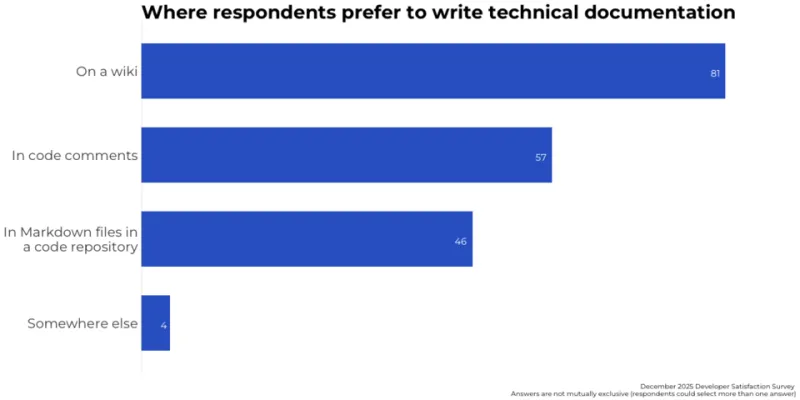
Name it explicitly. When your team understands why stepping away is productive — not just that it's allowed, but the actual mechanism — they're more likely to do it without guilt and more likely to return with something useful. Put the neuroscience in your team wiki. Make it part of onboarding.
Redesign the problem-dump ritual. Before a developer steps away from a hard problem, have them spend five minutes writing down exactly where they're stuck. Not to document it for posterity — to force the articulation that primes the incubation. A shared channel where people post their "stuck points" does double duty: it triggers their own passive processing and invites input from teammates who might have seen a similar issue.
Protect non-screen time like you protect deep work blocks. If your calendar culture makes it weird to block off a 30-minute walk, that's a cultural problem worth fixing. Some teams are now explicitly putting "offline blocks" on shared calendars — not to signal unavailability, but to normalize the idea that thinking doesn't only happen at a keyboard.
Debrief the "away" insights. When someone comes back from a run with a solution, make it a quick habit to ask: what were you thinking about when it clicked? That question alone starts to build a team-level understanding of how creative problem-solving actually works for different people.
The Productivity That Doesn't Look Like Productivity
The best engineers aren't the ones who spend the most time coding. They're the ones who show up to the keyboard with clarity — who've given their brains enough room to do the connective work that focused effort can't accomplish alone.
That might mean a longer lunch. A mid-afternoon walk around the neighborhood. A commute with no podcast, just the problem sitting loosely in the back of your mind. None of that looks impressive on a time tracker. All of it can be the difference between spinning your wheels for another two hours and shipping something that actually works.
The irony of modern engineering culture is that we've built incredibly sophisticated tools for tracking visible output while systematically starving the invisible process that makes great output possible.
Step away from the screen. Let the problem breathe. Then come back and build something worth sharing.