
Gath3r Where developers build, share, and connect.

Where developers build, share, and connect.

Gath3r

Stories, ideas & perspectives — thoughtfully written, beautifully told.

The Hidden Tax on Your Output: How Learning to Say No Became the Most Lucrative Skill in Engineering
Cover story

The Hidden Tax on Your Output: How Learning to Say No Became the Most Lucrative Skill in Engineering

Every time you context switch, your brain pays a toll you never see on a timesheet. The engineers quietly outearning their peers aren't working harder — they're just a lot more ruthless about what gets their attention.

Read the story →

Latest Articles

Ugly Code, Open Repo: Why Sharing Your Messiest Work Might Be the Smartest Move You Ever Make 02
Developer Growth

Ugly Code, Open Repo: Why Sharing Your Messiest Work Might Be the Smartest Move You Ever Make

Most developers wait until their code is 'ready' before sharing it with the world — and that instinct is costing them more than they realize. Opening up an imperfect project invites the kind of feedback that no amount of solo polishing ever could. Here's why your roughest work might actually be your most valuable teaching tool.


Why Your Brain Ghosts Your Best Ideas the Moment the Standup Starts 03
Engineering Culture

Why Your Brain Ghosts Your Best Ideas the Moment the Standup Starts

Every engineer knows the feeling: you're deep in a solution, the pieces are clicking, and then Slack pings you into a fifteen-minute sync. By the time you're back at your desk, the idea is gone. This isn't a willpower problem — it's neuroscience, and your team's meeting culture might be the culprit.

Why the Shower Might Be Your Most Productive Engineering Environment 04
Developer Growth

Why the Shower Might Be Your Most Productive Engineering Environment

Your best ideas probably aren't happening at your desk. The neuroscience behind why developers crack their hardest problems during walks, commutes, and completely unrelated activities — and what that means for how your team should actually be working.

Before You Hit Deploy, Talk to a Duck: The Surprisingly Powerful Pre-Ship Ritual Your Team Is Skipping 05
Engineering Culture

Before You Hit Deploy, Talk to a Duck: The Surprisingly Powerful Pre-Ship Ritual Your Team Is Skipping

Most teams spend thousands of hours on code review but almost nothing on the five-minute habit that catches bugs before anyone else even sees the code. Rubber duck debugging isn't just a quirky solo trick — it's an underutilized team practice with measurable impact. Here's why it works, and how to make it stick.

Your Past Bugs Are a Gold Mine — Here's How to Stop Letting Them Go to Waste 06
Developer Growth

Your Past Bugs Are a Gold Mine — Here's How to Stop Letting Them Go to Waste

The engineers who seem to fix things impossibly fast aren't smarter than you — they're better at remembering. A personal debugging log turns every painful outage and head-scratching error into a reusable asset that quietly compounds into career capital over time.

Stop Patching Fires: How Elite Engineers Interrogate Their Own Code Like a Crime Scene 07
Engineering Culture

Stop Patching Fires: How Elite Engineers Interrogate Their Own Code Like a Crime Scene

The best debuggers aren't just problem-solvers — they're forensic investigators who treat every bug as evidence of a deeper story. Here's the mindset shift that separates engineers who fix symptoms from those who eliminate root causes entirely.

Forget the Whiteboard: Why the Best Tech Interviews Throw You Into a Stranger's Code 08
Engineering Culture

Forget the Whiteboard: Why the Best Tech Interviews Throw You Into a Stranger's Code

Algorithmic puzzles on a whiteboard don't tell you much about how someone actually engineers. A growing number of hiring teams are scrapping the tradition entirely and replacing it with live debugging sessions inside real, unfamiliar codebases — and the results are changing how we think about what good engineering looks like.

The Career Cheat Code Nobody Talks About: Writing Docs Better Than Anyone Expects 09
Developer Growth

The Career Cheat Code Nobody Talks About: Writing Docs Better Than Anyone Expects

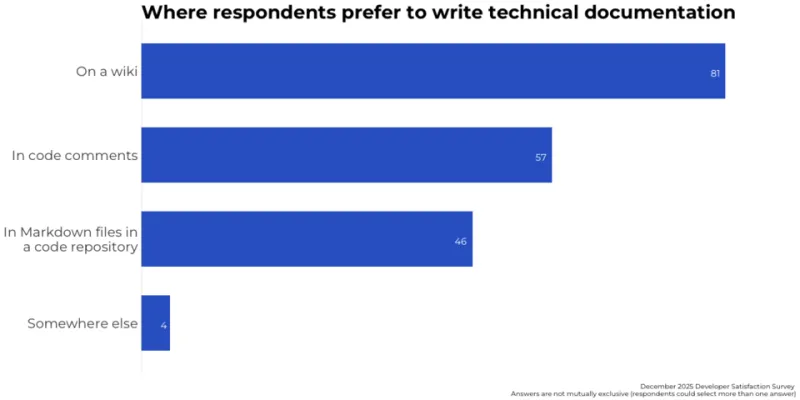
Most engineers treat documentation like a tax — something you pay reluctantly at the end of a sprint. But a small group of developers has figured out that writing exceptionally clear technical docs is one of the fastest, most underutilized ways to build a reputation, become indispensable, and open doors that pure coding skills rarely unlock.

Your Async Culture Isn't Broken — It Was Never Actually Built 10
Engineering Culture

Your Async Culture Isn't Broken — It Was Never Actually Built

Most remote engineering teams think they're doing async work. What they're actually doing is synchronous work with a time delay — and the difference is quietly destroying their velocity, burning out their people, and creating knowledge silos that compound over time. Here's how to tell if your team has fallen into this trap, and what genuinely high-functioning async teams do differently.

Talk It Out: The Neuroscience Behind Why Explaining Code to a Teammate Makes You a Better Engineer 11
Developer Growth

Talk It Out: The Neuroscience Behind Why Explaining Code to a Teammate Makes You a Better Engineer

Talking through a gnarly bug with a colleague isn't a sign you can't figure it out alone — it's actually one of the most cognitively powerful things you can do as a developer. Research into how the brain processes language and problem-solving reveals that articulating technical challenges rewires your thinking in ways that solo debugging simply can't. Here's how to make that work for you every single day.

The Underrated Skill That's Quietly Separating Senior Engineers from Everyone Else 12
Engineering Culture

The Underrated Skill That's Quietly Separating Senior Engineers from Everyone Else

Plenty of developers can write clean code. Far fewer can explain it clearly — and that gap is becoming one of the biggest differentiators in engineering careers. Developers who invest in documentation, tutorials, and written communication are building a kind of leverage that compounds across every team they touch. Here's why that matters more than most engineers realize.

Developer Growth

How Fixing Bugs in Other People's Code Became the Fastest Path to a Six-Figure Job

Open source contributions have quietly become one of the most powerful — and underused — career accelerators in software engineering. Developers who consistently show up for projects outside their day job are building reputations and relationships that traditional job applications simply can't replicate. Here's how the mechanics actually work.

Developer Growth

Your GitHub Is the New Handshake: How Public Code Is Replacing the Traditional Résumé

Hiring in tech is quietly going through a revolution, and your commit history might be doing more talking than your two-page CV ever could. We dug into how modern hiring managers evaluate developers through public contributions, and what that means for anyone trying to break in—or level up.

Engineering Culture

Time Zone Proof: How the Best Distributed Engineering Teams Work Without Constant Meetings

Real-time collaboration is a habit, not a requirement—and the most effective distributed teams figured that out a while ago. Here's a look at how high-performing remote engineering orgs structure their work to ship fast and stay sane across wildly different schedules.

Ditch the Ping Culture: How Elite Dev Teams Collaborate Without Living in Slack 16
Engineering Culture

Ditch the Ping Culture: How Elite Dev Teams Collaborate Without Living in Slack

Real-time messaging was supposed to make teams more connected. Instead, it turned a lot of developers into professional notification-dismissers. Here's how the best distributed engineering teams are reclaiming deep work time while staying genuinely in sync.

Developer Growth

Ship It Ugly: The Case for Building Your Side Project Out Loud

Sharing your half-finished app or your spectacular API failure might feel terrifying. But developers who build in public — warts and all — tend to grow faster, build stronger networks, and land better opportunities. Here's why radical transparency might be the best career move you're not making.