Forget the Whiteboard: Why the Best Tech Interviews Throw You Into a Stranger's Code
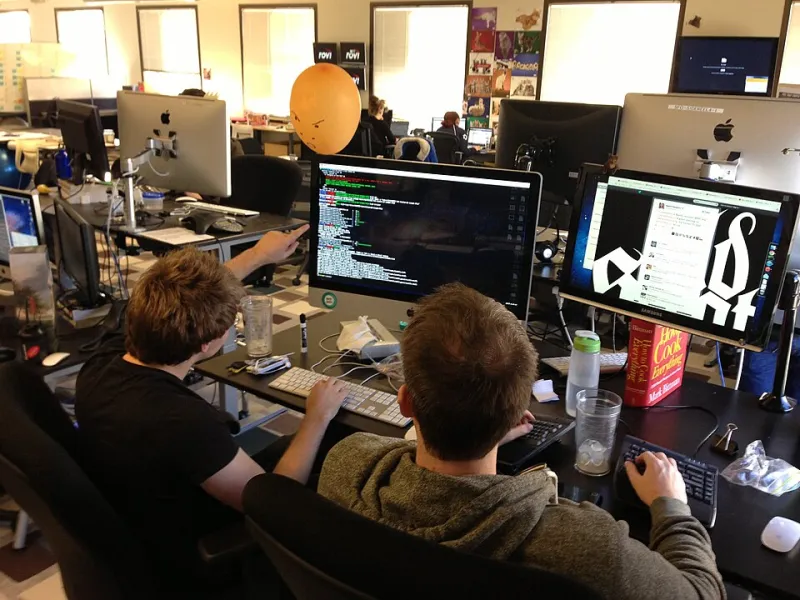
Photo: Vajrapani666, CC BY-SA 3.0, via Wikimedia Commons
Let's be honest for a second. Nobody at their day job sits down at 9am and reverses a binary tree on a blank whiteboard while someone watches them with a stopwatch. Real engineering looks nothing like a LeetCode medium. It looks like pulling up a service you've never touched, reading through someone else's logic, and figuring out why production is throwing a 500 at checkout — fast.
So why does so much of the industry still insist on testing people the other way?
A quiet but growing movement among engineering leaders is pushing back on the classic interview format. Instead of algorithm grinders and abstract data structure puzzles, they're running what some are calling "debugging interviews" — live sessions where candidates are dropped into an actual (or realistic) codebase they've never seen and asked to work through a problem in real time. And the signal these sessions produce? Way stronger.
What a Debugging Interview Actually Looks Like
The format varies by team, but the core concept is consistent: you hand the candidate a codebase, point them at a bug or unexpected behavior, and watch what happens.
Some teams use a sanitized copy of their own production code. Others build a purpose-built repo that mimics real-world complexity — multiple files, a few layers of abstraction, maybe a half-baked README. The candidate gets to use their actual tools: their editor, their terminal, maybe even Google.
That last part matters. The whole point is to simulate how real work actually gets done.
What interviewers are watching for isn't "did they find the bug in under ten minutes." It's the process. How does the candidate orient themselves in unfamiliar territory? Do they read the code top-to-bottom like a novel, or do they start tracing a specific execution path? When they hit something confusing, do they freeze, make assumptions, or ask a clarifying question?
The Skills That Actually Show Up
Here's what makes this format so revealing: it surfaces engineering maturity in ways that algorithmic interviews simply can't.
Communication under pressure. In a debugging session, candidates are expected to talk through what they're seeing. This isn't just a nice-to-have — it's a direct proxy for how they'd function in a real incident review or a pair programming session. Engineers who can articulate their reasoning while working through a problem are almost always easier to work with, mentor, and scale alongside.
Codebase intuition. Experienced engineers develop a kind of pattern recognition. They can look at an unfamiliar file and immediately start building a mental model of what it's supposed to do. Watching how quickly (or slowly) a candidate builds that model tells you a lot about how many codebases they've actually spent time in.
Tolerance for ambiguity. Most real bugs aren't clean. The reproduction steps are fuzzy, the error message is misleading, and the relevant code is three levels of indirection away from where you started looking. Candidates who get rattled by ambiguity early will struggle in environments where ambiguity is the norm.
Intellectual honesty. Does the candidate admit when they don't know something, or do they bluff? Do they revise their hypothesis when the evidence changes? These aren't soft skills — they're foundational to good engineering.
Why This Works Better Than What We've Been Doing
The whiteboard interview had a decent run. It was standardized, easy to score, and produced a kind of signal — just not necessarily the right kind. What it optimized for was rote preparation. If you spend three months grinding LeetCode, you'll probably pass most algorithm screens. But that preparation doesn't tell the interviewer much about what you'll be like to work with on a messy refactor or a production incident at 11pm.
The debugging interview is harder to game. You can't really "prep" for navigating a stranger's codebase the same way you memorize the optimal solution to a graph traversal. What you can do is get genuinely better at reading code — and that's kind of the point.
Teams that have made the switch often report that it also dramatically improves the candidate experience. Engineers who are good at their actual jobs tend to feel more confident in this format. They're being evaluated on what they do every day, not on a performance of skills that mostly live in interview prep books.
Bringing This Into Your Own Hiring Process
If you're on a team that's thinking about trying this, a few things worth considering:
Build the repo intentionally. The debugging environment should feel realistic but not overwhelming. A codebase that's too messy or too niche will just create noise. Aim for something that a mid-level engineer on your team could orient themselves in within five minutes.
Define what you're evaluating before the interview starts. It's easy to let this format drift into pure vibes. Agree ahead of time on what you're watching for — communication, hypothesis formation, tool usage, whatever your team actually values — and make sure every interviewer is scoring against the same rubric.
Give candidates a heads-up on format. This is a different kind of interview, and surprising someone with it cold isn't fair. Let them know in advance that they'll be working through code, and that they can use their own tools. Most engineers will appreciate the transparency.
Treat it as a conversation, not a test. The best debugging sessions feel collaborative. Interviewers should feel free to drop a hint if a candidate is stuck — not because you're lowering the bar, but because in real work, you'd never just watch a colleague spin for thirty minutes without saying anything.
The Bigger Picture
At Gath3r, we talk a lot about what it means to actually grow as an engineer — not just level up your interview skills, but get better at the craft. The shift toward debugging interviews is part of a broader reckoning in the industry with what we're actually trying to measure when we evaluate technical talent.
Code reading is a skill. Navigating unfamiliar systems is a skill. Communicating your reasoning under pressure is a skill. These are things that distinguish engineers who are genuinely strong from engineers who are just well-rehearsed.
If you're hiring, it might be time to throw out the whiteboard. And if you're job hunting, maybe the best thing you can do is spend some time on an open-source repo you've never touched and just start reading.